Death and taxes
Who? When? Where? How much? Everything we’ve been taught about taxation is in flux. Except, of course, the need to pay it.
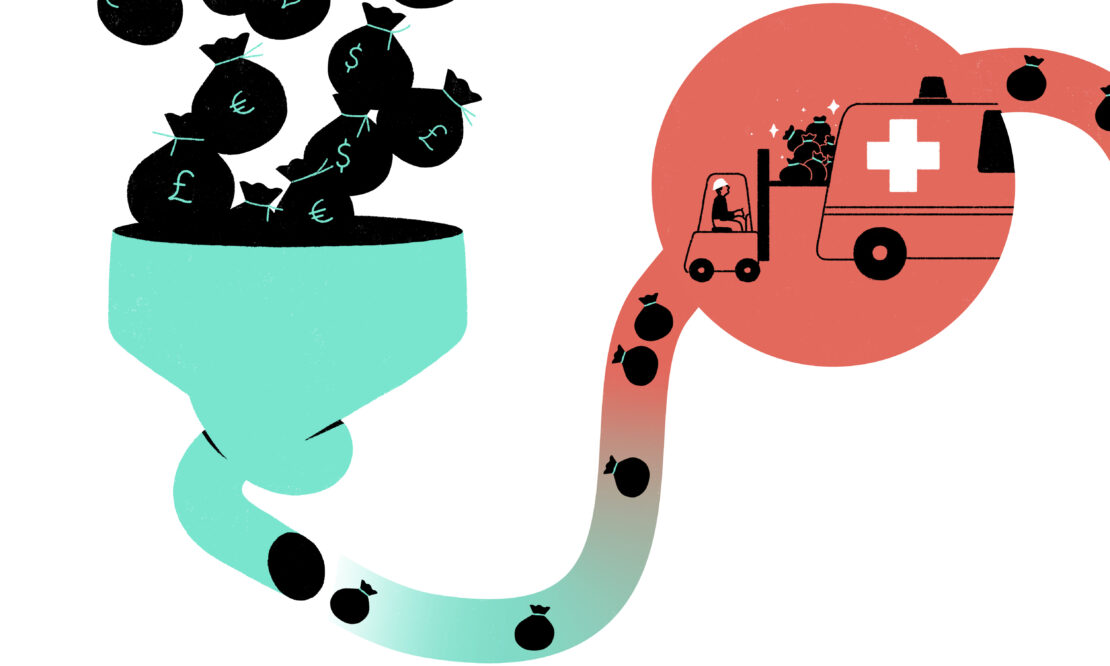
As the old saying goes, nothing in life is certain – apart from death and taxes. The former remains, sadly, inevitable. But the latter? Not so much. Digitisation and globalisation have radically disrupted every facet of how we live over the past two decades, and how, why, where and what we tax is no exception. As governments grapple with crypto, corporations and climate change, what does the future hold for taxation?
We tend to think of taxation as performing two principal functions – generating revenue and redistributing wealth. But there’s a third: behaviour change. And that third is garnering great interest right now, says Saskia Kohlhase, Assistant Professor in RSM’s Department of Accounting and Control.
“Taxes on environmental pollution, such as CO2 emissions, are a way tax can be used to steer behaviour,” she says. “Taxes to steer behaviour are higher on the political agenda now because many governments have clear targets on sustainability. Pollution is a key area, as are climate concerns.” But such new levies require careful crafting.
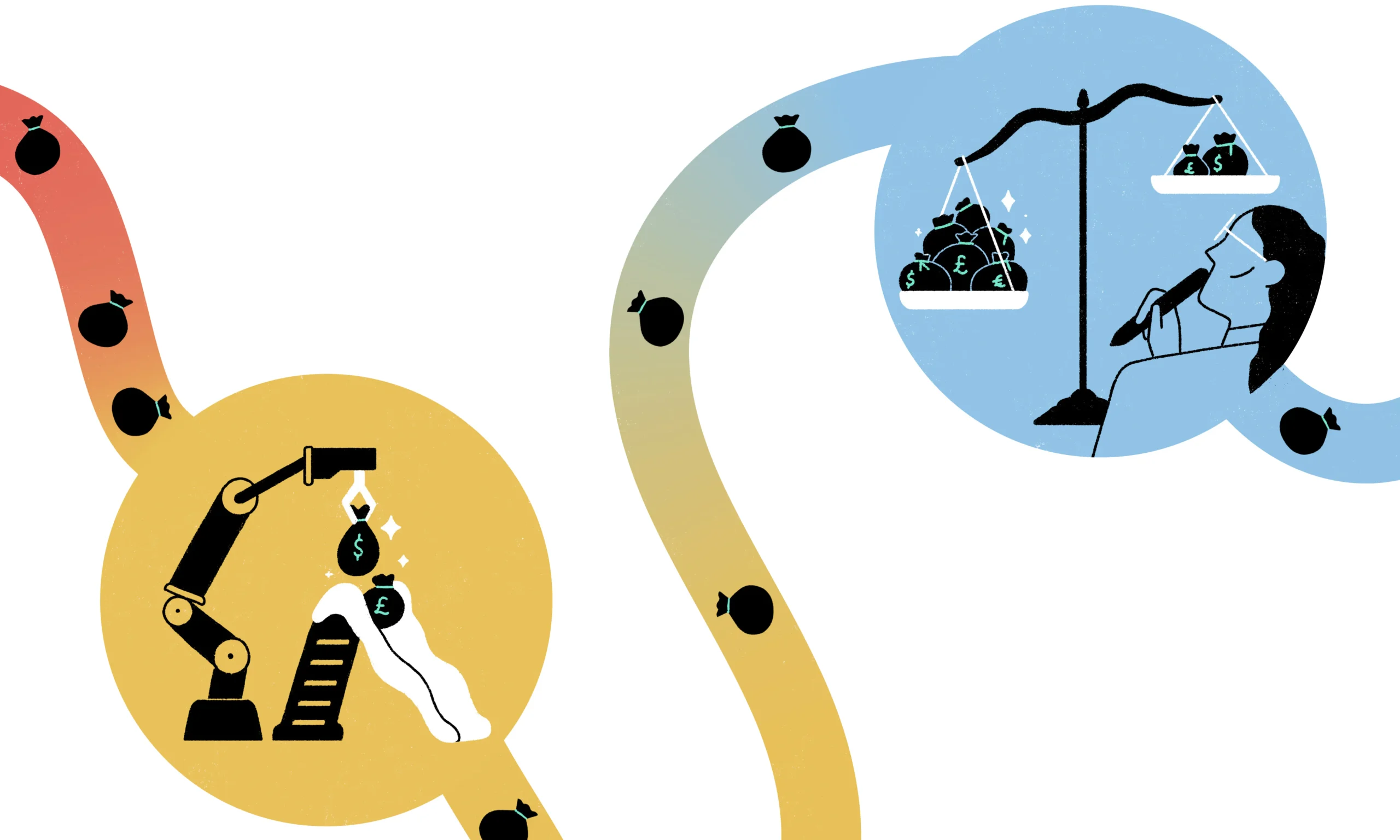
“Governments are always aiming for the sweet spot between the intended benefit and what people can afford to pay,” Kohlhase points out. “A further consideration is a fair implementation that gives people time to adjust. For example, steeply raising excise on gasoline could fundamentally impact people’s mobility, as they may no longer be able to afford to fill their cars. Governments need to find the sweet spot between swiftly altering behaviour and giving people time to adapt to those changes, such as by using public transport or switching to an electric vehicle.”
However, globalisation and digitisation also mean that governments must increasingly consider the mechanism, not just the what and the why. “For example, it has been getting more and more difficult for governments to raise taxes, especially from those, such as multinationals, who can move production or personnel from one jurisdiction to another relatively easily,” says tax consultant Peter Kranendonk (EMBA, 2022). “That creates a need for governments to agree on basic rules about taxation and the way we calculate things like the tax base, for example. And that has instigated all kinds of new reporting arrangements.”
Tax is usually about generating revenue and redistributing wealth. But right now it’s behaviour change that is garnering a great deal of interest and attention.
Indeed, the rapid changes of the past 20 years have seen tax authorities wrestling with some profound questions: what is the tax status of an NFT? Is cryptocurrency money? (The conclusion reached by most, incidentally, is that it is not money, and should be treated like shares for tax purposes: you pay tax on crypto only when you buy or sell it.)
Crypto is difficult to tax, Kranendonk points out, because it is difficult to buy, sell and trace. “For example, say I have $100,000 in a bank account and I wire it to a crypto trader. That’s traceable – but the transaction after that probably isn’t. Then perhaps I want to turn that $100,000 back into money. It can be challenging, especially if I use offshore traders. Then it is almost impossible to get your crypto profits back into the real economy, because banks will not accept it. This is one of the ways taxation doesn’t work. If crypto is not in the real economy and is not properly declared to the tax authorities, no tax can be paid on it. To avoid this hassle for their customers, well-known traders increasingly act as information agents and pass information on to the authorities.”
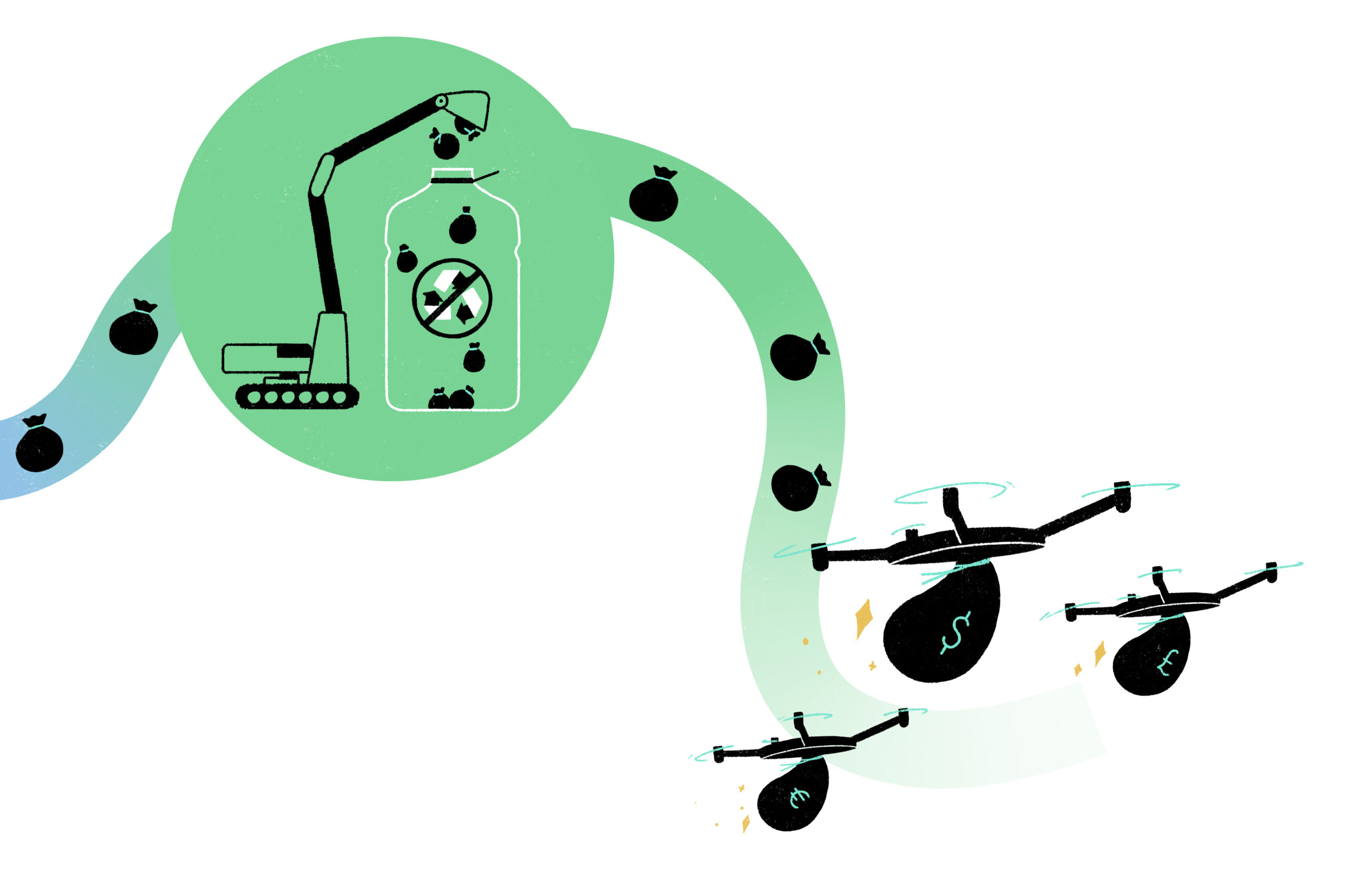
Taxation innovation is bound by numerous practicalities. Take the taxation of ultra-high net worth individuals, says Kohlhase. “With widening inequality gaps in societies, lots of people are once more thinking about how to raise wealth taxes,” she says. The issues that require attention in any future attempts at such taxation are cost efficiency and fairness. “Ultra-wealthy people often don’t keep their riches in money, they keep it in assets,” she explains. “But how do you value a car, a painting, a property? It’s essential that taxation treats people equally, so you must come up with a fair valuation system. That can be incredibly complex. Germany eventually abolished its wealth tax because the revenue simply didn’t justify the enforcement costs.”
This new approach to taxation also requires a new way of thinking. “We tend to approach taxation in terms of a cost-benefit analysis – calculate the income on one hand and the expense on the other,” says Kranendonk. “But that doesn’t take into account the environmental cost or benefit – both of which are likely to be very important in the future.”
But one area of taxation has recently achieved the seemingly impossible: global consensus. Enter the Organisation for Economic Co-operation and Development’s framework on profit shifting, the legal process of tax minimisation. Presently, companies can use complex yet completely legal tax structures to effectively choose in which country to declare their profits. This enables them to ‘shift’ profits made in countries with higher rates of corporation tax to countries with lower levels of taxation. Popular destinations include jurisdictions with low levels of corporation tax or so-called ‘tax havens’.
In contrast, a global minimum corporation tax would effectively eliminate any advantage in ‘shifting’ profits in this way, meaning that governments would receive tax revenue from corporations in line with the money made in their country. As tax flows into national exchequers, it could then be spent by governments for the public good.
One key area of taxation has finally achieved the impossible: global consensus.
The OECD’s framework is structured around two pillars. Pillar One applies to the largest multinationals, those exceeding €20bn in revenue with profitability of more than ten per cent, and will regulate where they pay tax given the global and increasingly digital nature of their operations. The principle has been agreed: now teams are working on the details. Pillar Two establishes a global minimum corporation tax of 15 per cent, with the EU, US and UK committed to introducing it in 2024, and many other countries following in 2025. “I remember in 2011, sitting at a conference where people were talking about the idea of a framework, which I was hearing discussed in depth for the first time,” Kohlhase says. “I thought, ‘I like it, but it’ll never get off the ground. It would require action on a global scale to make it work.’ Well, I and many others – most people in the tax profession, in fact – have been proven wrong.”
And now, the hard-won consensus achieved by the OECD has got policymakers thinking about other forms of taxation for the realities of the modern world, such as taxes based on where a company’s services are provided and where its customers are, rather than where it is based. “Companies like Google don’t have a subsidiary in every country, but the world uses Google and social media,” says Kranendonk. “How do you tax income that is generated through online sources? Where is your money and where can we tax it?”
Could this destination-based taxation ever apply to individual workers? It’s unlikely, says Kohlhase. “There are far fewer companies than there are remote workers. And it’s more straightforward to observe a person’s residence, save for a globetrotting few such as international sports people. I don’t anticipate a swift change to destination-based taxation for people – not least because such a major reform would have difficult-to-foresee revenue consequences.”
The future boundaries of taxation remain – for now – unknowable. “Governments are slow and cautious, with good reason,” notes Kohlhase. “But what we’re already seeing might be only the start.” From redistributing wealth to radically changing our behaviour, when taxes shift, entire societies shift with them.