Everyone thinks you’ve made it – except you
By any standards, Hanneke Wisman had a stellar career: a partner at global consulting firm KPMG by her early 30s. But she felt hemmed in. She longed to work creatively – to explore and lead differently. So she took a deep breath and flipped the script. This is what happened next.
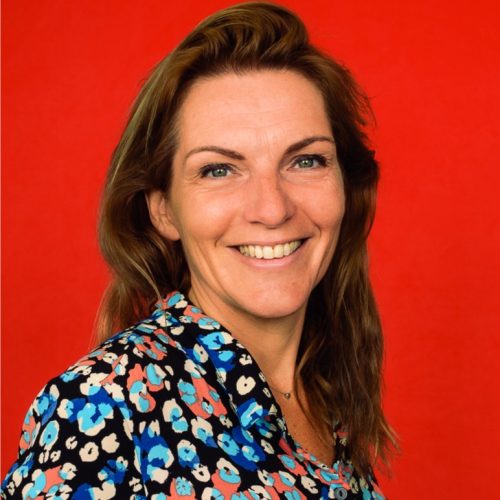
I was loyal to my company and loyal to my boss, but wasn’t loyal to myself
On the surface, it seemed that Hanneke Wisman had it all. After graduating from Erasmus University, she won a much-coveted entry-level role at global consulting firm KPMG. She worked there for 14 years, rising to become audit partner. She’d made it. “I was a female partner at KPMG by my early 30s,” she says. “Many people saw that as the ultimate success.”
But then, Wisman flipped the script. In 2018, she decided to leave KPMG and join family-owned construction company Dura Vermeer as Senior VP of Finance, leading its financial and sustainability strategy. “To the outside world, that looked like failure,” she says. “But failing to meet the expectations of others, to me, is not failure. It’s the power of standing still when everyone is telling you to go forward.”
So why change lanes? “It was an act of loyalty to myself,” she says. While she stresses that she learned a great deal at KPMG, she realised that having to work in a very particular way for her entire career was limiting her potential. Every risk had to be mitigated, every line reconciled, every hour accounted for. “That’s a mindset that builds precision. But it also gave me walls. It made my world too small. I was driven by perfection, and I thought that was a strength. But some part of me got silenced by it.”
She longed to work creatively – to explore, create and lead differently. “I was loyal to my company and loyal to my boss, but wasn’t loyal to myself. My children gave me the mirror that I needed when everyone was saying to me that I had made it, and I said: ‘No. I have to stop.’”
Entering an entirely new sector was a vast challenge for Wisman. The construction industry was in flux. Margins had been far too low for far too long; it was resistant to changes around sustainability, which seemed inevitable to Wisman; and costs and efficiency were key. “The focus was on control rather than creativity. That wasn’t too different from KPMG, but the main difference was that I got the opportunity to change things.”
The world, she realised, was shifting, and the construction industry had to change with it. “As environmental challenges grew, so did social expectations. They demanded that we rethink how we build our projects, how we work, and how we lead. I had the opportunity with this new company to face those challenges.”
Of course, it takes time to change a culture – and in the early days, Wisman admits to wondering if she had made the right choice. But gradually, she says, the walls broke down. “Creativity and exploration started. And then there was opportunity on a level I hadn’t experienced before.”
At KPMG, her role had been primarily focused on finance risk and compliance. At her new company, she found herself included in big-picture questions – with the time and space to explore, create and challenge. How could the company become more diverse, more innovative, more sustainable?
She relished coming up with new ideas. One of the things she’s proud of is the company’s Innovation Awards, which she set up to accelerate new ideas that help the company reach its goals. At first, the idea met resistance. “We are a project organisation, and innovation doesn’t fit within project spreadsheets,” she says. “Our clients are demanding. The conventional wisdom says we should not be spending valuable time thinking about other ways to construct roads, new materials or digital solutions.”
But she persisted, and the Awards took off. Now, those with ideas are given permission to experiment and think differently. “It’s been a game-changer. The culture has changed positively. And it opened space for conversations not just about costs and margins, but strategy, change, inclusion and technology.”
Leaving a world of structure and predictability looked like failure at the time – and, of course, things could have turned out very differently. “It’s not easy to start something new, because of the uncertainty,” says Wisman, who is now a member of RSM’s Advisory Board. “But by entering a world full of ambiguity and tension, I learned that progress often begins in those moments when you don’t have the answer – when you don’t have certainty. You have to sit still and just be, let ideas come to you. And then there is room for change.”